Milling is a crucial process in machining that involves removing material from a workpiece using a rotating cutter. The success of this process largely depends on the cutting parameters used, including the cutting speed, feed rate, and depth of cut. One essential tool that helps machinists optimize these parameters is the SFM (Surface Feet per Minute) chart. An SFM chart for milling provides a quick reference guide to determine the appropriate cutting speed for various materials and tools, ensuring efficient and safe machining operations.
Having a printable SFM chart for milling can be incredibly beneficial for machinists. It allows them to have a tangible reference point at their workstation, making it easier to consult and adjust their machining parameters as needed. This can lead to improved productivity, reduced tool wear, and enhanced overall quality of the machined parts. Moreover, with advancements in technology, it’s now possible to find and print SFM charts tailored to specific machining tasks, further increasing their utility and relevance.
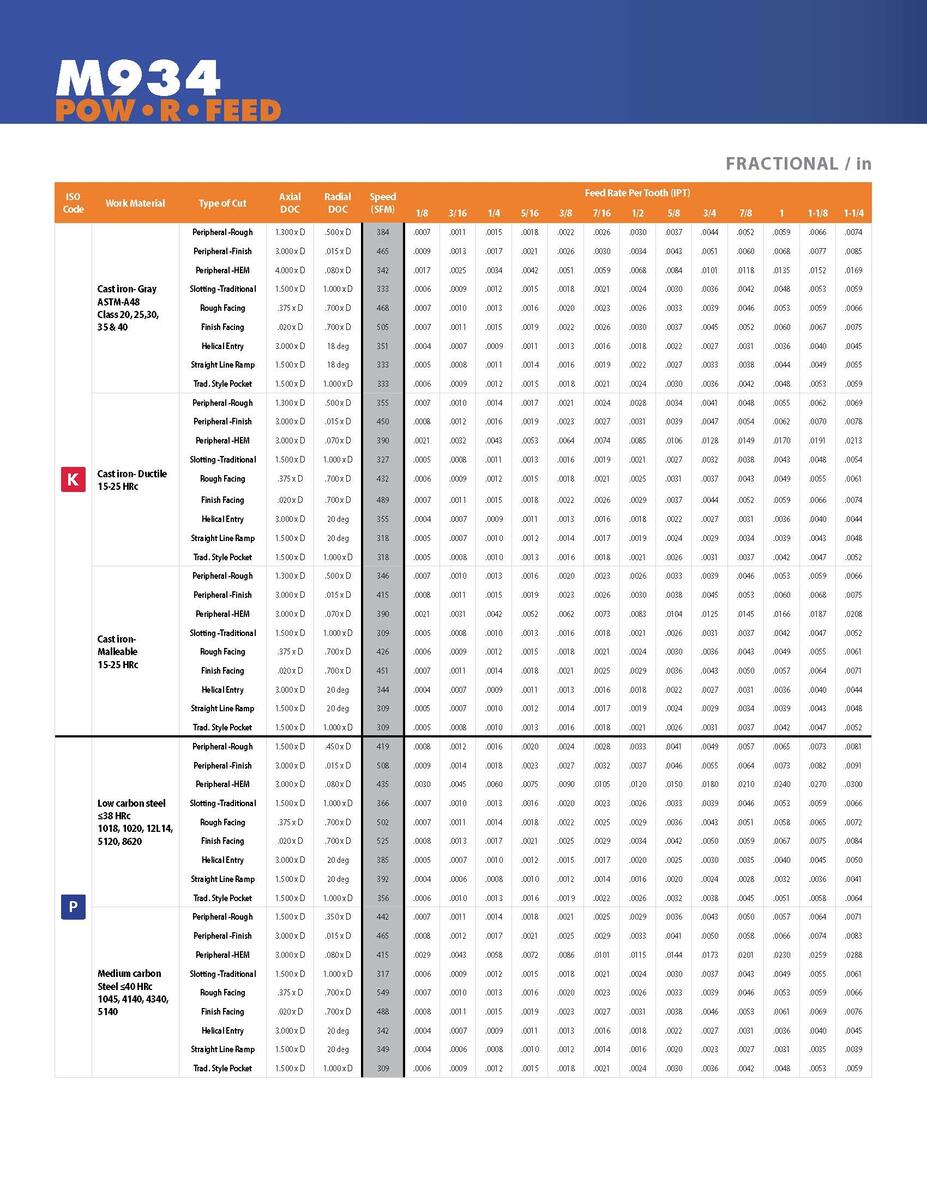
IMCO Speed And Feed Charts
Understanding SFM Charts
Understanding SFM charts is the first step towards leveraging their benefits for milling operations. Essentially, an SFM chart is a graphical representation that correlates the cutting speed (in surface feet per minute) with the material being machined and the type of cutter being used. By understanding how to read and interpret these charts, machinists can quickly identify the optimal cutting speed for their specific task, thereby minimizing the risk of tool failure and maximizing the efficiency of the machining process.
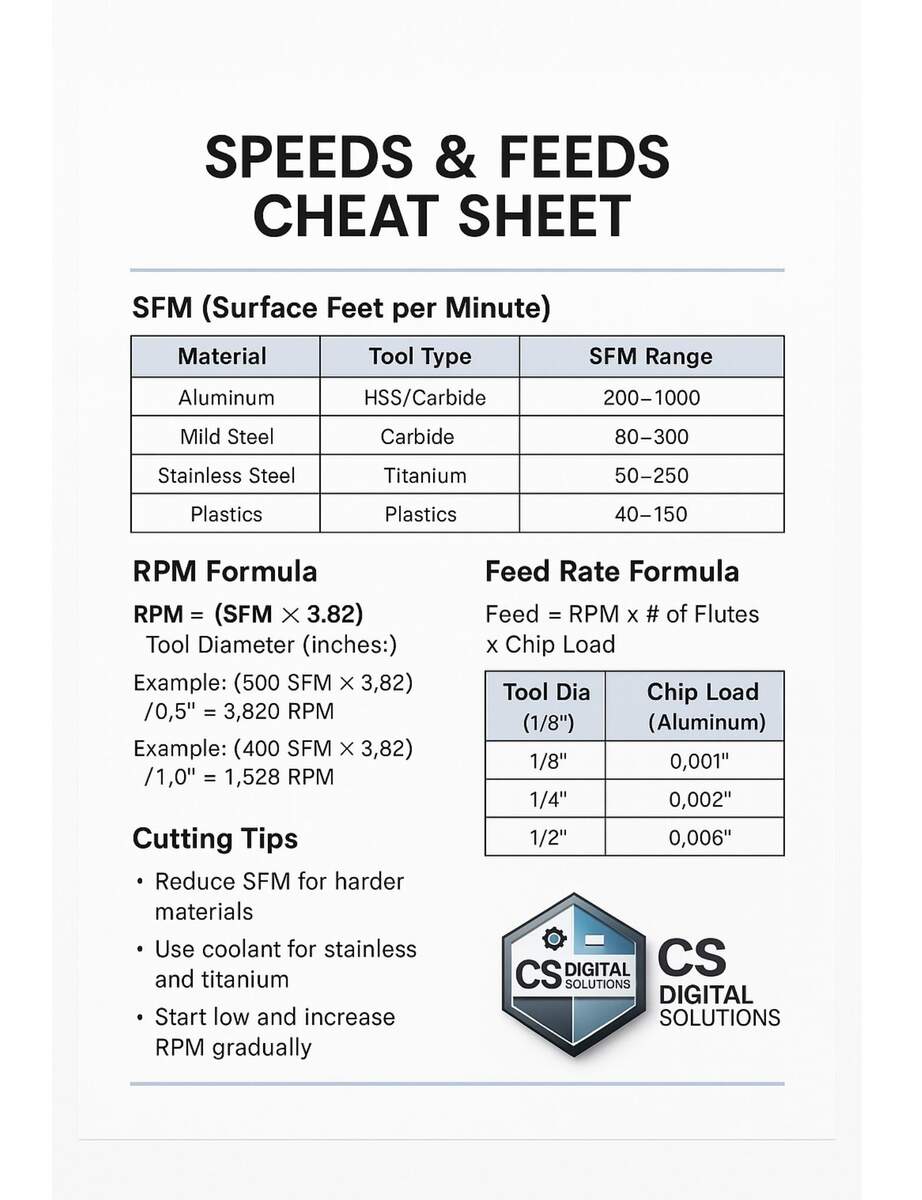
Machinist S Digital Bundle CNC Setup G M Code Charts PDF Download Etsy
Benefits of Using SFM Charts for Milling
The benefits of using SFM charts for milling are multifaceted. Not only do they help in achieving the optimal cutting speed, but they also play a critical role in extending the life of the cutting tools. By operating within the recommended speed ranges, machinists can reduce the wear and tear on their tools, leading to cost savings over time. Additionally, SFM charts contribute to safer working conditions by minimizing the risk of tool breakage, which can be dangerous and lead to costly downtime for repairs and maintenance.
How to Use SFM Charts for Optimal Milling
Knowing how to use SFM charts for optimal milling is key to unlocking their full potential. The process begins with identifying the material of the workpiece and the type of cutter being used. With this information, machinists can consult the SFM chart to find the recommended cutting speed. It’s also important to consider other factors such as the depth of cut, feed rate, and the condition of the machine tool, as these can affect the optimal cutting speed. By carefully adjusting these parameters based on the guidance from the SFM chart, machinists can achieve high-quality finishes, reduce machining time, and improve overall productivity.
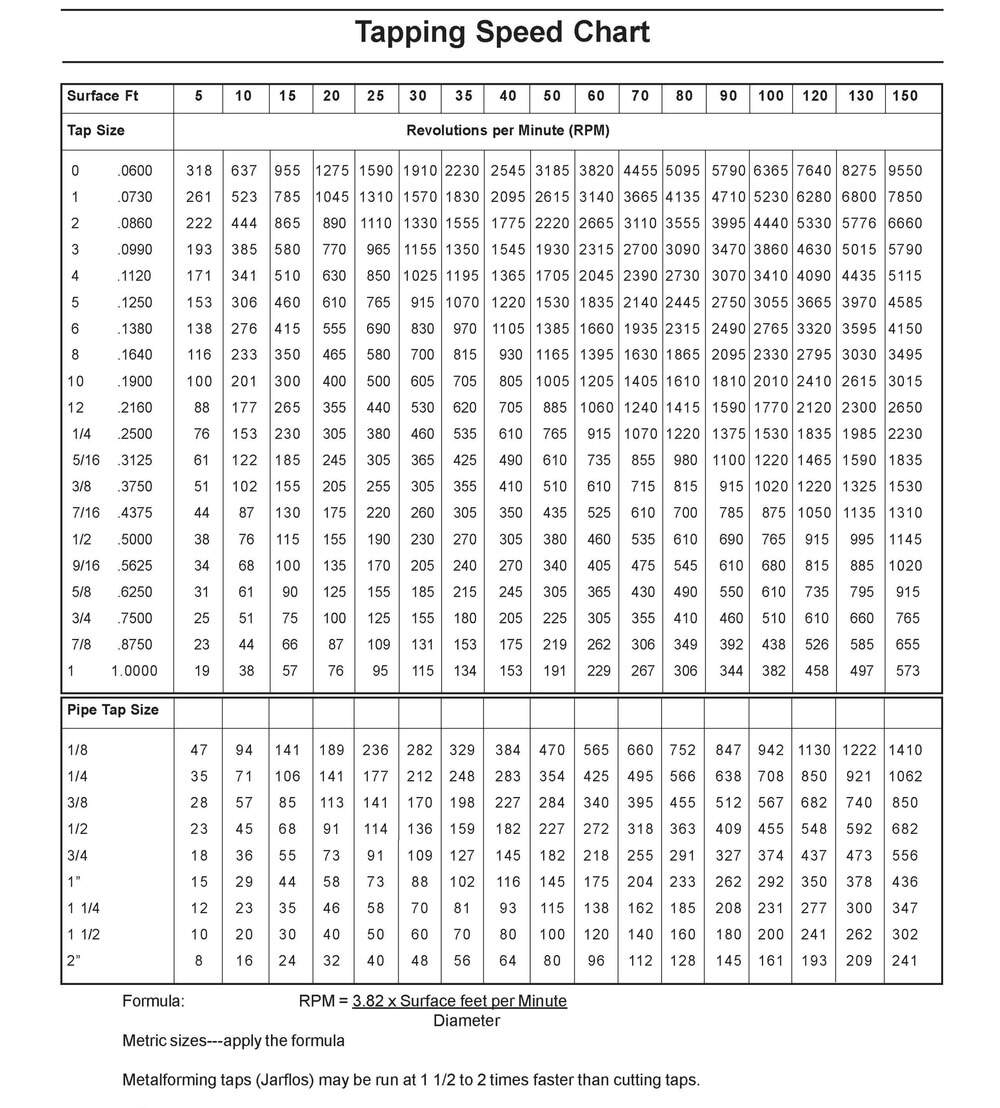
Tapping Speed Chart Jarvis Cutting Tools
In conclusion, having access to a printable SFM chart for milling can significantly enhance machining operations. It provides a straightforward and efficient way to determine the optimal cutting parameters, leading to improved efficiency, safety, and product quality. As the machining industry continues to evolve, the importance of leveraging such tools will only continue to grow, making it essential for machinists to familiarize themselves with SFM charts and incorporate them into their daily practices.
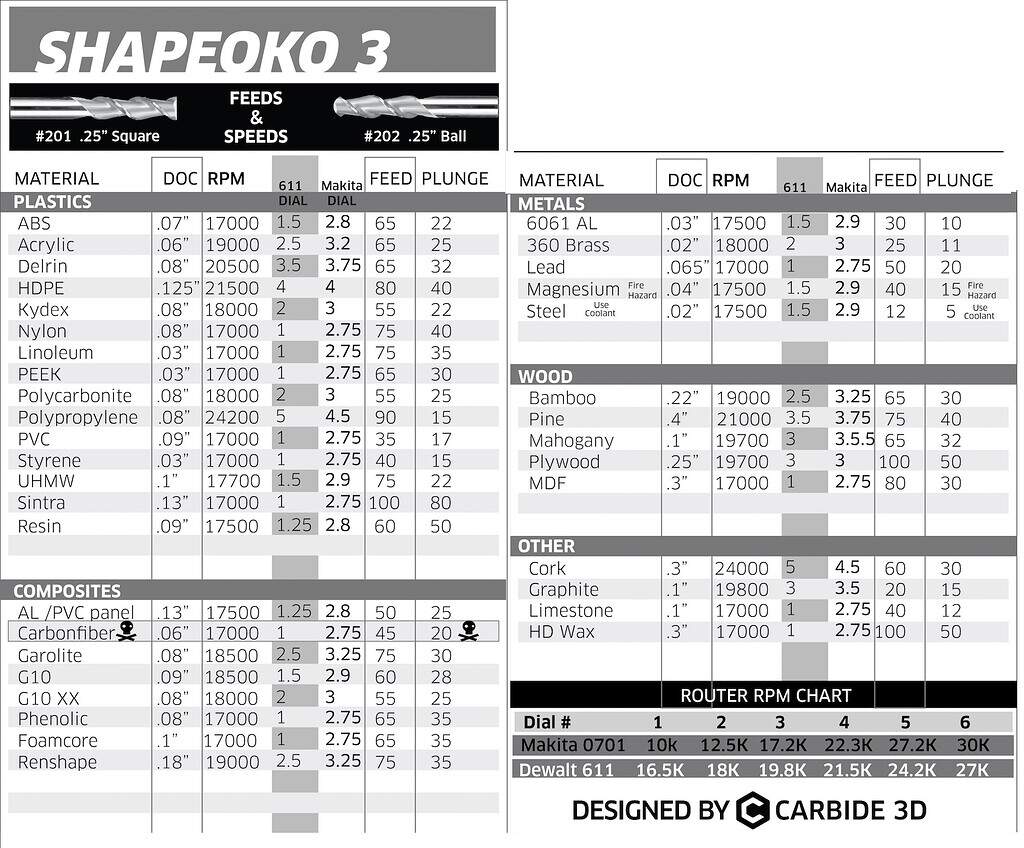
Shapeoko Feeds And Speeds Chart Reformatted Shapeoko Carbide 3D Community Site
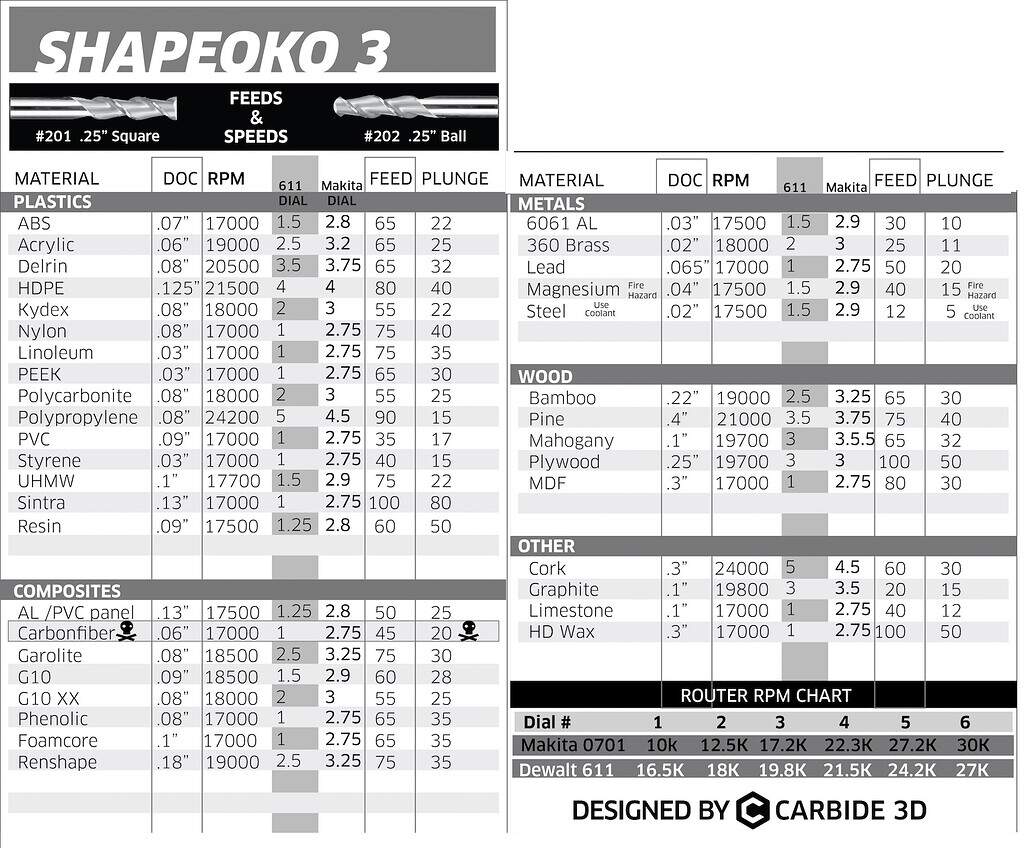
Shapeoko Feeds And Speeds Chart Reformatted Shapeoko Carbide 3D Community Site